The Industry We Talk About… and the One We Don’t
There are two versions of the property industry. The one we talk about all the time is the obvious one; deals being done, portfolios growing, regulations shifting, technology evolving. It’s fast-moving, commercially driven and, at times, relentlessly focused on performance.
Then there’s the other version. The one that sits slightly out of view. Quieter, less visible, and rarely the subject of conference panels or LinkedIn posts. It’s the version of the industry that shows up when something goes wrong. When life takes a turn that no one planned for, and suddenly the job, the deals and the day-to-day pressures are no longer the biggest concern.
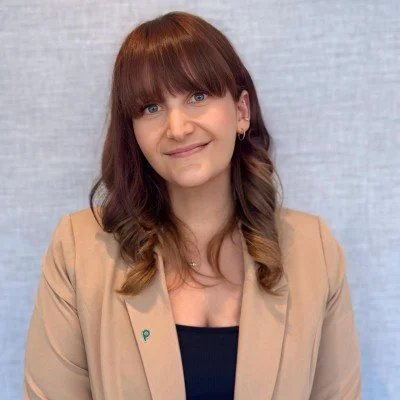
That’s the version we ended up talking about in my conversation with Megan Eighteen.
Going into it, it would have been easy to assume this was going to be a fairly straightforward discussion about Propertymark, professionalism and the usual industry themes.
And yes, those things came up. But what quickly became clear is that there’s a part of our sector that many people simply aren’t aware of, despite the fact it sits right alongside everything we do.
The Propertymark Trust is, in many ways, exactly that. It exists within the industry, funded and supported by it, yet for a large number of people working in property, it remains largely unknown until the moment it’s needed.
And that, if we’re honest, is part of the problem.
Because the reality is that this industry, for all its strengths, can also be unforgiving. It moves quickly, it demands a lot from people, and it doesn’t naturally leave much space for when things don’t go to plan. Illness, bereavement, financial hardship, sudden changes in personal circumstances — these aren’t things the average business model is designed to absorb easily. And yet they happen, more often than we probably acknowledge.
What the Trust does is step into that gap.
Not in a theoretical or policy-driven way, but in a very practical sense. Helping people cover costs they simply can’t meet. Supporting families through moments that are, quite frankly, overwhelming. Providing a level of assistance that allows someone to get through a period of their life that would otherwise be far more difficult.
It’s not complicated in concept. But it is significant in impact.
What struck me in the conversation with Megan was how grounded and matter-of-fact it all was. There was no attempt to dress it up or make it sound more elaborate than it is. Just a clear explanation of what the Trust does, who it supports, and why it matters. That simplicity is, in many ways, what makes it so powerful.
Because it forces you to look at the industry slightly differently.
We spend a lot of time talking about standards, regulation and professionalism, and rightly so. Those things matter. They shape how we operate and how we’re perceived. But there’s another layer to professionalism that doesn’t get discussed nearly as often, which is how an industry looks after its own when the usual structures aren’t enough.
And that’s where this becomes more than just a charity conversation.
It becomes a reflection of what kind of industry we actually are.
From The Depositary’s perspective, this resonates more than it might first appear. We talk a lot about making processes easier, faster and better, and that often gets framed in terms of efficiency and time saving. Reducing a three-hour process to fifteen minutes is an obvious operational win, but the more interesting question is what that time and headspace gets used for instead.
Because when people aren’t buried in unnecessary admin or chasing avoidable issues, they have more capacity. More capacity to communicate properly, to support clients, to think clearly, and, importantly, to support each other when it’s needed.
That human element is often the first thing to get squeezed when systems are inefficient and workloads are high. Not because people don’t care, but because there simply isn’t the space.
Which brings us back to the point that sat underneath the whole conversation.
Property is, and always has been, a people business. But that phrase only really holds weight if it applies not just to how we deal with clients, but how we operate as an industry more broadly. It’s easy to say we’re people-focused when everything is running smoothly. It’s much more meaningful when that focus extends to the moments that are anything but smooth.
The Propertymark Trust is a reminder that there is a part of this industry doing exactly that. Quietly, consistently and without much fanfare.
The question is whether more of us should be paying attention to it.
Not just when something goes wrong, but before it does.
Because if the last few years have shown us anything, it’s that resilience in this industry isn’t just about systems, processes or performance metrics. It’s also about support, awareness and a willingness to recognise that the people behind the work are not immune to the same challenges as everyone else.
That may not be the most commercially obvious conversation to have. But it might be one of the more important ones.