Licensing the licenced: When councils with failing social housing police the private rented sector
Local authority landlord licensing has become a default lever across England & Wales. Councils say it lifts standards and flushes out rogue landlords; critics point to rising costs, repeat five‑year designations, and thin evidence of lasting improvement. At the same time, national reforms, the Renters’ Rights Bill, a PRS Decent Homes Standard, and Awaab’s Law‑style time limits, promise system‑wide tools that may duplicate or outperform local schemes. What follows is a data‑first test of those claims: we follow the money (fees and fines), weigh enforcement yields against outcomes, show how data can surface “hidden HMOs,” and set it all against councils’ own social‑housing record. The aim is simple: in 2025, what actually improves homes, and who is best placed to enforce it?
1) What licensing is, and why there’s more of it
Under the Housing Act 2004, councils can require licences for specific property types (HMOs) and, where evidence supports it, designate areas for selective licensing covering most privately‑rented homes. In December 2024, the government issued a General Approval: from 23 December 2024, councils no longer need Secretary of State approval for additional or selective schemes, provided they consult those affected for at least 10 weeks. The approval also asks (as best practice) that councils publish the outcome of their statutory scheme reviews. That matters for transparency and evaluation. GOV.UK
Government guidance frames selective licensing as a targeted response to issues like poor property conditions, anti‑social behaviour, deprivation and crime, with a duty to consult widely and to keep designations under review. GOV.UK
The Renters’ Rights Bill changes the backdrop. It abolishes fixed terms, making all assured tenancies periodic; tenants can end a tenancy with two months’ notice; it creates a PRS Database, PRS Ombudsman, and extends both the Decent Homes Standard and Awaab’s Law to the PRS (with time‑bound duties to tackle hazards like damp & mould). The Bill also strengthens councils’ investigatory powers and civil penalties. In other words: the legal environment is moving toward national baseline standards and data‑led enforcement. GOV.UK+1
Implication: if national reforms give tenants easier exit, expose poor properties in a national database, and arm councils with stronger tools, then the additional case for expensive, repeating, borough‑level licensing should be made with clear, measurable outcomes, not as a default.
2) Follow the money (and the outcomes)
Licensing fees vary but can be substantial at scale. Liverpool’s selective licensing fee is £680 per property (standard), with discounts in some scenarios; the 2022–2027 designation covers up to 80% of the city’s PRS, tens of thousands of homes. That’s a potential multi‑million‑pound revenue stream (noting that fees are meant to cover the scheme’s costs, not generate profit). Liverpool City Council+1
Beyond Liverpool, industry analysis frequently notes the scale. One 2024 summary claimed English councils generated £20m+ in 2023 from selective licensing fees, with Liverpool accounting for £5m+; that’s an external estimate rather than audited council accounts, but it indicates the magnitude. Separate tracking shows licensing‑related fines in London surpassing £10m since the city’s rogue landlord database launched, underlining that enforcement can itself be a sizeable line of activity. DLG Corporate Corporate Websitelandlordzone.co.uk
The strongest justification for big schemes is simple: do they work? Under the General Approval, councils are asked to publish the results of scheme reviews (Housing Act 2004, s84(3)). Too often, those reviews are thin, lagging, or framed around activity (number of inspections, number of licences issued) rather than outcomes (reduction in Category 1 hazards, time to remedy damp & mould, measured tenant satisfaction). If licensing is renewed after 5 years, the public should be able to see a clear, independently‑audited causal case for repeating it. GOV.UK
3) The legitimacy gap: policing others while failing your own stock
Below are documented examples of councils that (a) operate or propose significant PRS licensing schemes and (b) have been formally reprimanded over failings in their own social housing services. This is not about “naming and shaming” for its own sake; it’s about the governance problem when a landlord with poor repair records asserts the authority to police private landlords, often at scale and with large fee income.
Hackney (London)
New licensing push (2025 consultation): Hackney is consulting on borough‑wide additional HMO licensing and selective licensing across 17 of 21 wards (covering ~76% of non‑HMO PRS). Proposed fees: £925 per selective licence and £1,400 per additional HMO licence, for five years. consultation.hackney.gov.uk+1
Ombudsman special investigation (May 2025): The Housing Ombudsman found poor practice in 79% of complaints sampled, with particular failings on leaks, damp & mould and complaint handling. It referenced 1,400 open damp & mould cases (500+ overdue; 600+ severe) reported by the Regulator. Hackney was warned not to overstate improvements. Housing Ombudsman+1Housing Today
Why this matters: a council claiming licensing is essential to drive up standards must, at minimum, demonstrate credible progress in its own landlord performance, especially on damp & mould.
Lewisham (London)
Licensing: Borough‑wide selective licensing (phased from late 2023/2024) and HMO licensing operate alongside enforcement activity. Lewisham Council
Special investigation (July 2024): The Ombudsman launched a paragraph 49 special investigation following an 85% maladministration rate and 16 severe maladministration findings, 90% maladministration in leaks/damp/mould cases. Housing Ombudsman
Waltham Forest (London)

Photo: The wub, CC BY‑SA 4.0, via Wikimedia Commons Wikimedia Common
Licensing: Longstanding mandatory/additional HMO and selective licensing; council documentation champions licensing as raising standards. walthamforest.gov.uk+1
Enforcement leader: Analysis of the London Rogue Landlord & Agent Checker showed £876,400 in licensing‑related fines in 2024 alone, the highest in the capital that year. Property Industry Eye
Reprimand: The Secretary of State wrote to Waltham Forest (April 2024) after three severe maladministration findings by the Housing Ombudsman. GOV.UK
Southwark (London)
Licensing: Selective/additional licensing operate; HMO licensing is long‑established. Southwark Council
Reprimands: Two severe maladministration findings led to a ministerial letter (Sept 2023). Further cases continue, one resident’s collapsed lung was reported in a damp/mould case running eight years; the council was ordered to pay compensation. Another decision (2023–2024) found maladministration for slow damp/mould response and complaint handling. GOV.UKHousing Ombudsman+1
Hammersmith & Fulham (London)
Licensing: Additional and mansatory HMO licensing apply; the borough actively enforces. Housing Ombudsman
Reprimands: A 2024 Ombudsman special report flagged systemic failings in repairs and complaints; a 2025 decision found severe maladministration for failing to address damp & mould and poor complaint handling, ordering compensation and actions. Housing Ombudsman+1
Haringey (London)
Licensing: Additional/selective licensing operates. Haringey Council
Reprimand: Special investigation (2023) identified failures in repairs and complaint handling; the learning themes echo damp/mould and records issues seen elsewhere. GOV.UK
Tower Hamlets (London)
Licensing: Additional/selective licensing programmes continue. Tower Hamlets
Governance context: Following persistent performance issues, the council brought Tower Hamlets Homes (ALMO) back in‑house from 1 November 2023 to improve landlord services, acknowledging serious failings. Tower Hamlets
Beyond London
Liverpool (England): A city‑scale selective licensing scheme runs 2022–2027, covering up to 80% of PRS; standard fee £680 per property (with a menu of discounts). Liverpool City Council+1
Newham (London): Pioneered borough‑wide licensing; over £5m in extra Council Tax was recouped (2013–2018) by identifying unregistered and subdivided properties, evidence that data‑led enforcement can pay for itself without perpetual scheme expansion. Newham Council
Cardiff (Wales): Additional HMO licensing in Cathays and Plasnewydd has been repeatedly re‑declared (each scheme runs five years and must be re‑declared). Wales also has the national Rent Smart Wales landlord/agent licensing regime. The Public Services Ombudsman for Wales has upheld damp/mould complaints against councils, e.g., Cardiff. cardiffstudentletting.comPublic Services Ombudsman for Wales
Pattern: The issue is widespread: where councils operate large licensing schemes, we often also see Ombudsman letters, special investigations, or severe maladministration decisions about their own landlord services, especially around damp, mould, repairs, and complaints.
4) Data shows “hidden HMOs” can be found, without licensing everything
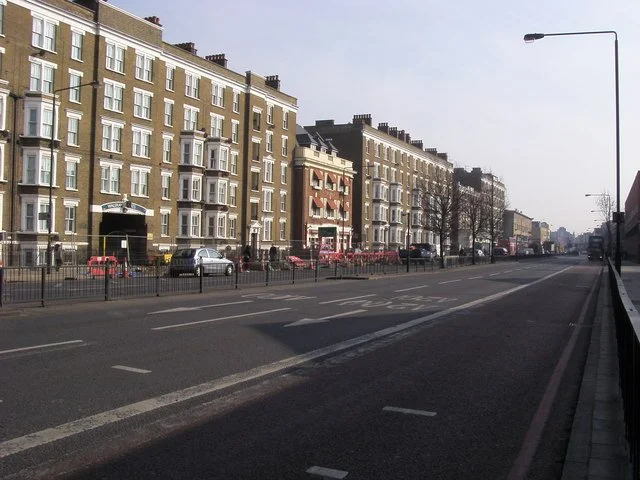
Photo: Shaun Ferguson, CC BY‑SA 2.0, via Geograph/Wikimedia Commons Wikimedia Comm
On 2 August 2025, BBC One London aired For Rent: Rooms Under the Radar, investigating unlicensed HMOs. Marks Out Of Tenancy (MOOT) provided OccupID analytics, anonymised tenancy data, occupancy patterns, and risk clustering, to help locate high‑risk addresses. The segment reported that in some boroughs (e.g., Newham), unlicensed HMOs may outnumber licensed ones nearly 10:1, with hundreds identified in Tower Hamlets and concentrations along Old Kent Road (Southwark). The thrust is simple: good data narrows the haystack for enforcement. Marks Out Of Tenancy
Why this matters: Councils sometimes argue that only broad licensing nets reveal non‑compliance. The BBC/MOOT example shows you can triage the stock: flag probable HMOs via data (room counts, turnover, utilities, council tax anomalies), then inspect surgically. In other words, intelligence‑led enforcement is viable, and arguably more proportionate, than repeatedly licensing most of the PRS forever.
5) Case study deep‑dive: Hackney’s 2025 proposals, against Ombudsman findings
Hackney’s consultation proposes borough‑wide additional HMO licensing and selective licensing across 17 wards (about 76% of non‑HMO PRS). The fee schedule sets £925 (selective) and £1,400 (additional HMO) for a five‑year term. The evidence pack says licensing complements, not replaces, the RRB reforms. consultation.hackney.gov.uk+1
But, the Housing Ombudsman’s special investigation (May 2025) found 79% poor practice in sampled cases and highlighted 1,400 open damp/mould cases (500+ overdue; 600+ severe). The Ombudsman cautioned the council about a “positivity prism” overstating progress compared with residents’ lived experience. Housing Ombudsman+1Housing Today
The policy question isn’t whether licensing is legal or even useful, it’s proportionality and sequencing. Should a landlord with systemic failings in repairs, damp/mould and complaints be allowed to roll‑out one of the largest PRS licensing schemes in the country (raising multi‑million‑pound fees over five years) before it can evidence sustained compliance in its own stock? That is precisely the legitimacy gap many PRS landlords and tenants raise.
6) Enforcement and fines: robust activity doesn’t prove schemes “work”
Waltham Forest illustrates the difference between activity and outcomes. The borough reportedly led London in licensing‑related fines in 2024 (£876,400). Yet the DLUHC wrote in April 2024 after three severe maladministration findings against the council’s landlord service. You can fine aggressively and still fail tenants as a landlord. Both can be true, and that duality undercuts the moral authority used to justify scheme renewals. Property Industry EyeGOV.UK
Similarly, Southwark has run licensing while repeatedly clocking severe maladministration for damp/mould and complaint handling, at one point being ordered to pay compensation to residents and receiving a ministerial letter. GOV.UKHousing Ombudsman
Bottom line: counting licences issued, inspections completed, or fines levied isn’t the same as proving that homes are safer and healthier at the end of a five‑year designation.
7) The RRB changes the calculation for tenants - and councils
RRB highlights (England only):
All tenancies periodic; tenants can leave with 2 months’ notice. This directly reduces the risk of tenants being locked into substandard homes. GOV.UK
PRS Database and Ombudsman: more information, easier redress, stronger investigatory powers for councils. GOV.UK
Decent Homes Standard (PRS) and Awaab’s Law (PRS): national safety/quality floors and time‑bound duties to tackle hazards like damp/mould. GOV.UK
These changes de‑risk exit for tenants and raise the national floor for standards, shrinking the unique role of local licensing as the main lever for change. Licensing can still be targeted where evidence shows it will outperform RRB‑era enforcement. But repeating blanket five‑year designations should no longer be treated as inevitable.
8) What “good evidence” for any future (or renewed) scheme looks like
If councils want to continue running or expanding licensing in the RRB era, they should publish clear, comparable evidence that licensing delivers outcomes beyond what could be achieved through intelligence‑led enforcement plus the RRB toolset. At minimum:
Before/after hazard rates: Category 1 HHSRS hazards per 1,000 licensed homes vs. comparable non‑licensed areas; time‑to‑remedy for damp/mould, electrical and fire hazards.
Resident outcomes: Tenants’ reported health/satisfaction improvements, reductions in re‑reports.
Displacement tracking: Are problems simply moving to neighbouring streets/wards?
Cost‑effectiveness: £ per hazard removed or per enforcement success, compared with targeted, data‑led enforcement without universal licensing.
Transparency on funds: Licence income and spend itemised (processing, inspections, legal), with independent assurance that fees do not exceed cost recovery.
Compliance with the RRB: How the council is using the PRS Database, Ombudsman, civil penalties, and Awaab’s Law remedies to triage and escalate. GOV.UKGOV.UK
9) A proportional alternative: “licence to enforce”—not “licence to let”
Intelligence‑led enforcement first. Adopt the MOOT/OccupID style approach: combine tenancy churn, HMRC/benefit fraud markers, council tax anomalies, EPC data, previous hazard records, and local case intelligence to generate HMO/overcrowding risk scores, then knock on the right doors. This pinpoints hidden HMOs and overcrowding without licensing everyone. Marks Out Of Tenancy
Time‑bound, targeted designations. Where selective licensing is still justified (e.g., distinct, evidenced clusters of poor conditions), use tightly drawn boundaries with sunset clauses and hard outcome targets (hazards reduced by X%; average remediation time cut by Y days). Publish a mid‑term review and commit to no renewal if targets are not met.
A “competency gate” for councils. As a policy reform, central guidance could require that any council seeking a new/renewed licensing designation must first demonstrate compliance in its own social housing service, e.g., no open Ombudsman special investigation, and no recent severe maladministration trends on damp/mould or complaint handling. (DLUHC already writes to landlords following such findings; linking that to licensing approval would align incentives.) GOV.UK+1
Stronger review duty. The General Approval nudges councils to publish scheme reviews; that should be upgraded, mandatory, with a prescribed, outcome‑led template, and ideally independent evaluation before any re‑designation. GOV.UK
10) A note on Wales
Wales already operates Rent Smart Wales, a national landlord/agent licensing framework, alongside local additional HMO licensing in hotspots (e.g., Cardiff’s Cathays and Plasnewydd re‑declarations). The Public Services Ombudsman for Wales has repeatedly upheld damp/mould complaints against local authorities (including Cardiff), illustrating that public‑sector landlord performance is a UK‑wide issue, not just an English one. cardiffstudentletting.comPublic Services Ombudsman for Wales
11) Conclusion: Raise standards, start at home
If licensing truly worked in the way often claimed, one five‑year term should bring conditions to a level where universal licensing is no longer necessary. In practice, many councils re‑declare schemes, sometimes larger and more expensive, without publishing robust, independent evidence of outcome‑level success. Meanwhile, Ombudsman special investigations, severe maladministration decisions and ministerial letters to councils about their own landlord failures keep arriving.
The RRB gives councils new powers, tenants new rights, and the system new data. Use those first. Where licensing is still necessary, make it targeted, time‑bound, outcome‑led, and contingent on the council proving it can meet the same standards it demands of private landlords. That’s a fairer deal for tenants and responsible landlords alike, and a surer path to safer homes.